publications
publications in reversed chronological order.
2026
- Effects of lateral stratification on the dynamics of turbulent impinging line fountainsTanmay Agrawal, Vamsi Krishna Chalamalla, and Narsing Kumar JhaJournal of Fluid Mechanics, 2026
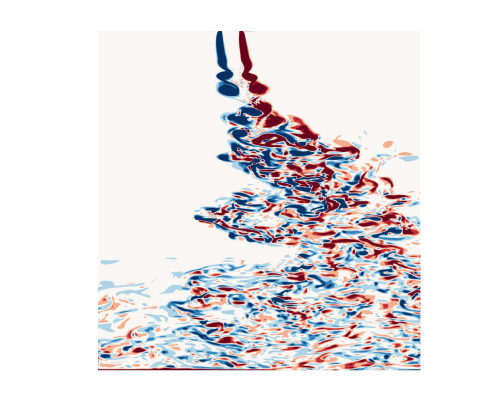
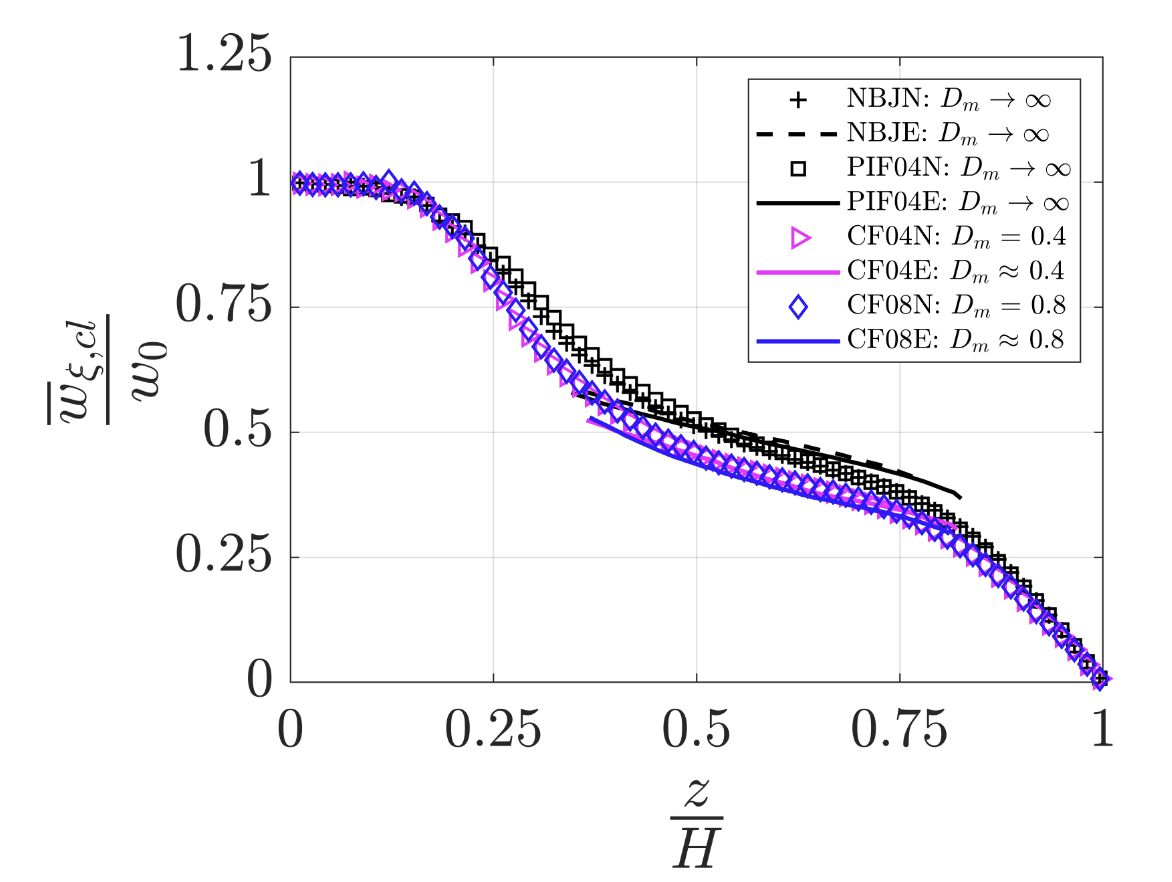
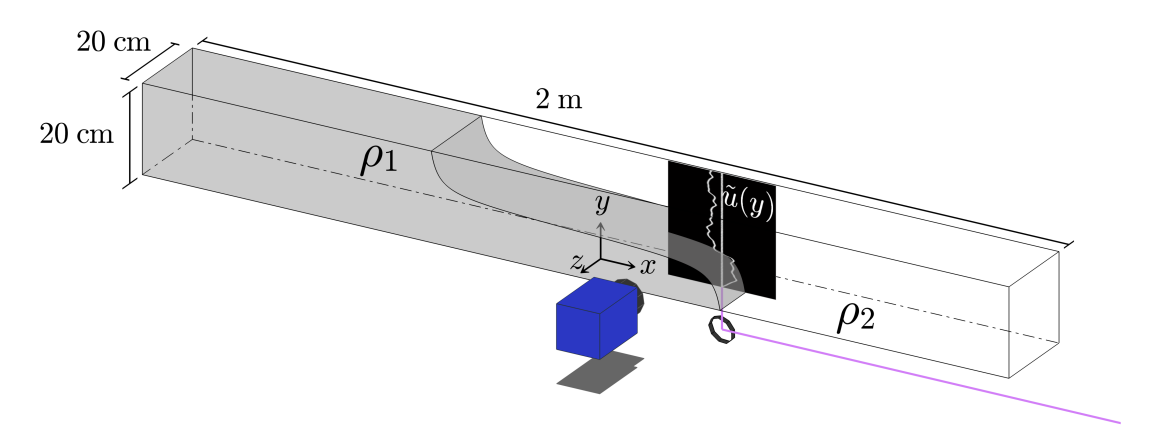
Turbulent line fountains are often operated in environments with a lateral density difference which are integral to engineering applications such as air curtains and bubble screens. While the dynamics of fountains in a uniform ambient (UA) has been widely studied, the underlying flow physics of their interaction with a lateral density stratification remain poorly understood. This study addresses this knowledge gap through a synergistic investigation combining high-fidelity large-eddy simulations and time-resolved particle image velocimetry measurements. We quantify the trajectory and spreading characteristics, flow statistics and entrainment dynamics of line fountains for a wide range of lateral density stratification and compare them with the canonical case of a UA. Our results reveal a new scaling law for the fountain’s trajectory 𝑥𝑐𝑙, which follows a noticeably steep power law (𝑥𝑐𝑙 ∝𝑧2) that is fundamentally different from jets in a unidirectional cross-flow. This is due to the bidirectional non-uniform lateral forcing and an adverse pressure gradient generated at the impingement surface. These mechanisms also oppose the fountain motion and result in a reduction in their centreline velocity compared with the UA cases. The spatial development of fountains is also affected by the lateral density stratification as it spreads more on the buoyant side exhibiting an asymmetry in the local half-width. The mean velocity statistics was shown to be symmetric if appropriate length scales are chosen for normalization on the buoyant and non-buoyant side. However, the turbulence profiles exhibit an asymmetric behaviour. A quantitative analysis of the fountain’s unsteadiness from experiments reveals that the lateral stratification actively energizes the natural, low-frequency flapping mode. The quantification of entrainment coefficient confirms that the fountains in laterally stratified ambient entrains up to 20 % more fluid than in a UA. These findings provide a deeper understanding of the structural and dynamical aspects of line fountains in complex, stratified environments.
@article{Agrawal_Chalamalla_Jha_2026,
  title = {Effects of lateral stratification on the dynamics of turbulent impinging line fountains},
  volume = {1031},
  doi = {10.1017/jfm.2026.11318},
  journal = {Journal of Fluid Mechanics},
  author = {Agrawal, Tanmay and Chalamalla, Vamsi Krishna and Jha, Narsing Kumar},
  year = {2026},
  pages = {A25},
}
2025
- Book Chapter
 On the Equivalence of Top and Bottom Gravity Currents in a Linearly Stratified Channel: A Review and Extension of Data Processing and Prediction TheoryTanmay Agrawal, Marius Ungarish, and Vamsi ChalamallaParticulate Gravity Currents: Theory, Experiments, and Environmental Applications, 2025
The analysis of gravity currents in a stratified ambient (relevant to geophysical and environmental applications) is complicated by the relatively large number of physical input parameters that allow for various scalings of the data; this is exacerbated for particle-driven flows where additional parameters are involved. This creates a lack of consistency, or even confusion, concerning the interpretation and prediction power of the available knowledge. We discuss the propagation of lock-release (Boussinesq, inertial–buoyancy) gravity currents at the bottom, top, and middle (intrusion) of a linearly stratified ambient tank. We focus attention on the evaluation of the constant speed of propagation in the initial phase (or stage) called “slumping.” Two major methods have been used in previous studies: (a) empirical or data-processing analysis (EDP) and (b) shallow-water (SW) theory analysis. The methods use different definitions of the stratification parameter and different scalings of the variables (including the speed of propagation). We show that the SW method, with a small extension, is physically and mathematically more convenient; results of experiments, simulations, and approximate models can be consistently unified for both top and bottom gravity currents, with and without particles. This generalization improves the insights and the prediction power concerning these phenomena.
@article{agrawal2025equivalence,
  title = {On the Equivalence of Top and Bottom Gravity Currents in a Linearly Stratified Channel: A Review and Extension of Data Processing and Prediction Theory},
  author = {Agrawal, Tanmay and Ungarish, Marius and Chalamalla, Vamsi},
  journal = {Particulate Gravity Currents: Theory, Experiments, and Environmental Applications},
  pages = {89--102},
  year = {2025},
  publisher = {Wiley Online Library},
  doi = {10.1002/9781394216727.ch6},
}
2024
- Velocity statistics of air curtain flows using LES and PIVTanmay Agrawal, Narsing K. Jha, and Vamsi K. ChalamallaIn 1st European Fluid Dynamics Conference (EFDC1), Sep 2024
@inproceedings{agrawal2024velocity, title = {Velocity statistics of air curtain flows using LES and PIV}, author = {Agrawal, Tanmay and Jha, Narsing K. and Chalamalla, Vamsi K.}, booktitle = {1st European Fluid Dynamics Conference (EFDC1)}, year = {2024}, month = sep, address = {Aachen, Germany}, } - Performance and flow dynamics of heavy air curtains using experiments and numerical simulationsTanmay Agrawal, Shresth Agarwal, Vamsi Krishna Chalamalla, and 1 more authorEnvironmental Fluid Mechanics, Sep 2024
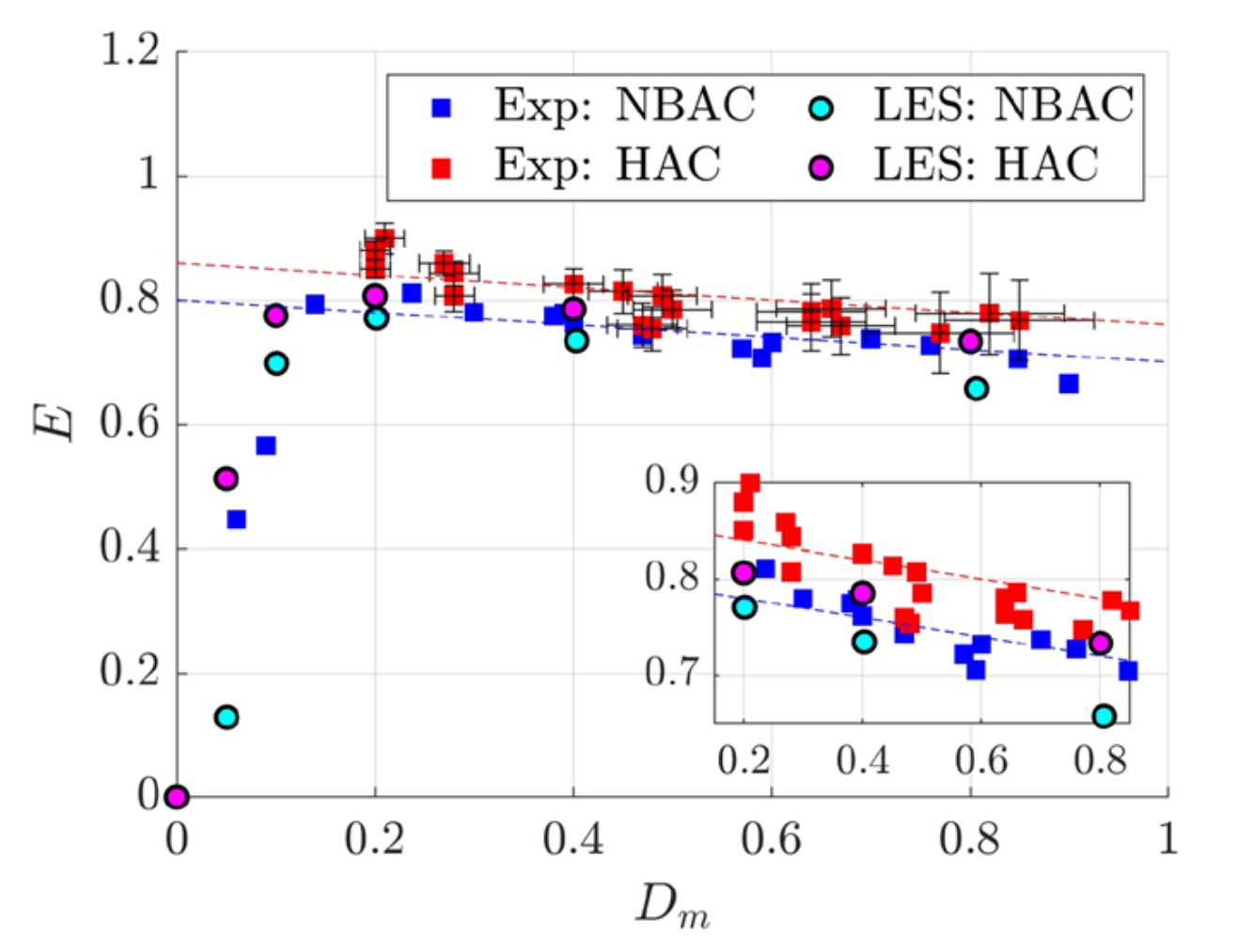
Air curtain devices (ACD) are commonly installed in domestic and commercial buildings to suppress the buoyancy-driven exchange flow through a doorway opening. Generally, the operating density of an ACD is equal to that of the indoor space making it neutrally buoyant. In the present study, we evaluate the performance of heavy air curtains where the operating density of the ACD is higher than that of the ambient fluid. The primary objective is to quantify the air curtain effectiveness, E, that determines the thermal comfort of building occupants based on the mean temperature inside the interrogated region. Experiments and numerical simulations are conducted and validated for various values of deflection modulus, D_m, that compare the relative magnitude of the jet momentum and transverse stack effect due to buoyancy. The other important non-dimensional parameter is the density ratio, S, which compares the extent of added buoyancy in ACD to that of across the doorway. In addition, the velocity dynamics of the air curtains are compared with an isothermal jet to understand the underlying effects that the buoyancy causes on the jet development. The general structure of air curtains that characterize the jet inclination and penetration is visualized through injecting a dye, and it agrees very well with the buoyancy distribution obtained using simulations at different D_m. Upon introduction of an assisting buoyancy, it has been found that the infiltration reduces by 25% compared to a neutrally buoyant air curtain for practical values of D_m.
@article{agrawal2024performance,
  title = {Performance and flow dynamics of heavy air curtains using experiments and numerical simulations},
  author = {Agrawal, Tanmay and Agarwal, Shresth and Chalamalla, Vamsi Krishna and Jha, Narsing Kumar},
  journal = {Environmental Fluid Mechanics},
  volume = {24},
  number = {5},
  pages = {875--898},
  year = {2024},
  publisher = {Springer},
  doi = {10.1007/s10652-023-09948-8},
}
2023
- Numerical investigation of air curtain flows in the doorway of a building using RANS and LESTanmay Agrawal, Narsing Kumar Jha, and Vamsi Krishna ChalamallaComputers & Fluids, Sep 2023
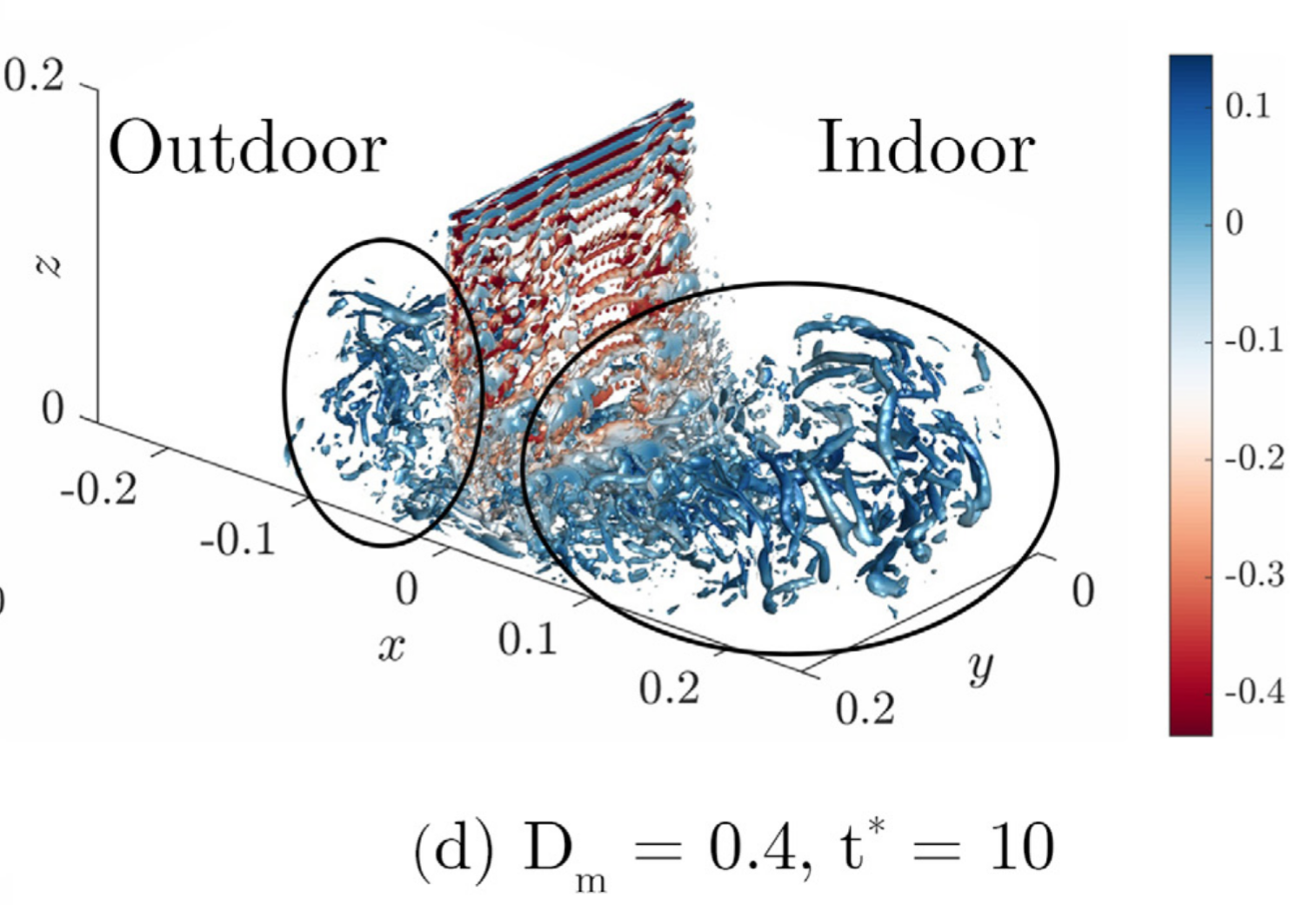
Air curtains are commonly adopted in building flows to facilitate aerodynamic sealing against the exchange flow that occurs across an open doorway due to the density differences owing to buoyancy. This paper reports numerical simulations of air curtain flows using Reynolds-averaged Navier-Stokes (RANS) and large-eddy simulation (LES) methodologies. Computations are performed for various operating conditions that are described using a deflection modulus (D_m) which ranges from 0 to 1.25. Physically, D_m represents the relative strength of the jet momentum flux compared to the transverse stack effect. The value of this deflection modulus, along with qualitative distribution of buoyancy, demarcates the operating regime of an air curtain into unstable (D_m \lessapprox 0.1), stable (D_m \gtrapprox 0.2), and strong installation (D_m \gtrapprox 0.6). The quantification of aerodynamic sealing is established using effectiveness, E, which suggests that the optimal operation lies in the stable regime with the poorest performance in the unstable regime. The comparison between various simulation methodologies suggests that 2D RANS computations generally over-predict the effectiveness, whereas both 3D RANS and LES are able to estimate E reasonably well, especially at practical values of D_m. If the employed LES grid is sufficiently fine, the predicted effectiveness falls within the experimental uncertainty limits. Furthermore, we quantify the statistics of turbulence in the flow field using the transport equation of turbulent kinetic energy. This analysis reveals that shear production and turbulent dissipation are dominant processes in the flow. In comparison, the effects of transport terms and buoyancy production are rather small. These quantities are shown to scale well with w^3/l where w and l are the characteristic velocity and length scales associated with an air curtain. Visualization of large-scale coherent structures using the Q-criterion depicted the presence of long spanwise vortices in the shear layer with a wide range of scales of motion at higher D_m. These vortical structures break down significantly upon impinging on the wall (floor), resulting in a complex spatiotemporal distribution of vortices.
@article{agrawal2023numerical,
  title = {Numerical investigation of air curtain flows in the doorway of a building using RANS and LES},
  author = {Agrawal, Tanmay and Jha, Narsing Kumar and Chalamalla, Vamsi Krishna},
  journal = {Computers \& Fluids},
  volume = {263},
  pages = {105948},
  year = {2023},
  publisher = {Elsevier},
  doi = {10.1016/j.compfluid.2023.105948},
}
2022
- Dynamics of a buoyant gravity current propagating in a linearly stratified mediumTanmay Agrawal, Siva Heramb Peddada, and Vamsi Krishna ChalamallaPhysics of Fluids, Sep 2022
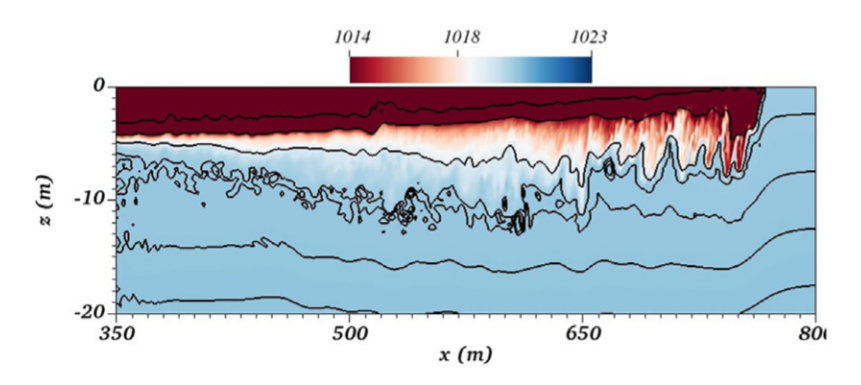
In this study, we investigate partial and full-depth buoyant gravity currents propagating along the top surface in a linearly stratified medium. Two and three-dimensional numerical simulations are performed to study the effect of stratification and initial current depth, on the front speed, internal wave field, and turbulence characteristics. The stratification is varied through a non-dimensional parameter R=\frac\rho_0 - \rho_C\rho_b-\rho_0, ranging between 0.04 to 85, where \rho_C is the constant bulk density of the current fluid and \rho_0, \rho_b represent the densities of the ambient fluid at the top and bottom surfaces respectively. For large values of R (\rho_0-\rho_C>>\rho_b-\rho_0), we observe that the resulting Froude number (Fr = \fracUNH) is greater than 1/\pi, and the flow is characterized as supercritical, where the front speed exceeds the long wave speed. In the supercritical regime, Kelvin-Helmholtz billows are prominently seen along with an internal solitary wave which propagates with the density front. As the R value decreases, the relative strength of the ambient stratification increases when compared to the horizontal density difference at the top surface, leading to a subcritical flow regime where the front speed is smaller when compared to the long wave speed. The Kelvin-Helmholtz billows and the solitary wave gradually disappears, and vertically propagating high mode internal waves are prominently seen for R < 1. Quantification of the Froude number for various values of R and h/H shows that it follows a power law, Fr ∝(h/H \times R)^1/2, with the proportionality constant 0.72. This scaling works well for all the partial-depth cases considered in this study i.e. h/H = 1/8, 1/6, 1/4 and 1/3 while a slight deviation is observed for the full-depth gravity currents that corresponds to h/H = 1.
@article{agrawal2022dynamics,
  title = {Dynamics of a buoyant gravity current propagating in a linearly stratified medium},
  author = {Agrawal, Tanmay and Peddada, Siva Heramb and Chalamalla, Vamsi Krishna},
  journal = {Physics of Fluids},
  volume = {34},
  number = {7},
  year = {2022},
  publisher = {AIP Publishing},
  doi = {10.1063/5.0091683},
}
2021
- Towards understanding air curtain flows using RANS based numerical simulationsTanmay Agrawal, Narsing K. Jha, and Vamsi K. ChalamallaIn ISHMT-ASTFE Heat and Mass Transfer Conference, Dec 2021
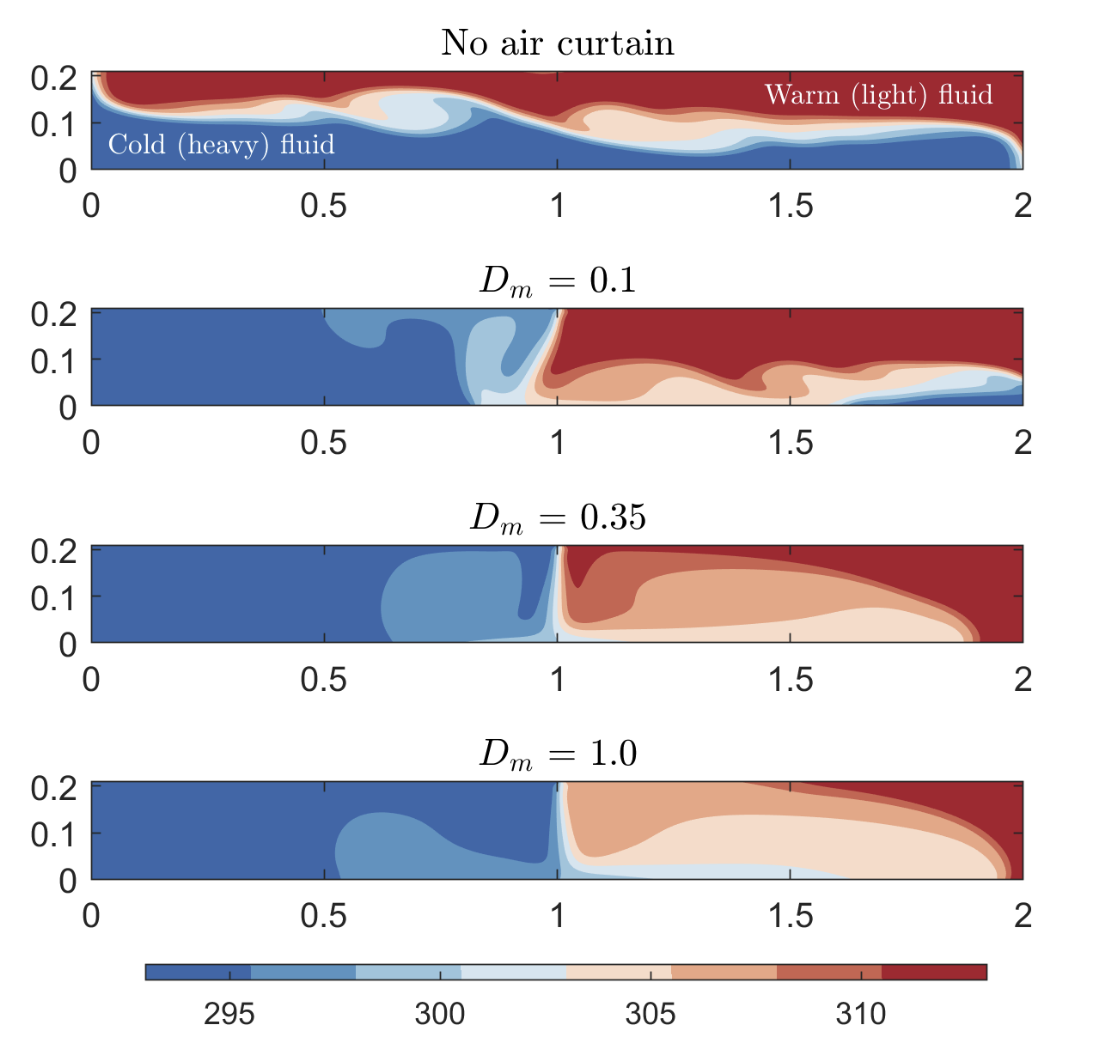
Air curtains are widely employed in domestic and industrial buildings to provide aerodynamic sealing against buoyancydriven exchange flows that occur through an open doorway due to the density differences. Such exchange results in undesirable heat and moisture losses through the doorway, as well as an inflow of uninvited substances e.g. pollutants, viruses, micro-organisms, dust, odours etc., which could deteriorate the indoor air quality of a building. Essentially, an air curtain is a planar turbulent jet produced by a fan unit that is blown through the nozzle, typically downwards, with a suitably high velocity. The performance of an air curtain, a parameter of importance from an engineering perspective, is largely dictated by its ability to inhibit this buoyancy-driven exchange flow. In the present study, we report two-dimensional numerical simulations of air curtain flows based on the Reynoldsaveraged Navier-Stokes (RANS) formulation. These computations are shown to be in good agreement with the experiments conducted in a similar facility on a laboratory scale. Based on these simulations, we quantify the optimum velocity (in the form of a deflection modulus) at which the aerodynamic sealing (quantified as effectiveness) of the air-curtain is maximum. We also found that a higher effectiveness may not imply a larger fraction of domain being aerodynamically sealed.
@inproceedings{agrawal2021towards, title = {Towards understanding air curtain flows using RANS based numerical simulations}, author = {Agrawal, Tanmay and Jha, Narsing K. and Chalamalla, Vamsi K.}, booktitle = {ISHMT-ASTFE Heat and Mass Transfer Conference}, year = {2021}, month = dec, doi = {10.1615/IHMTC-2021.4120}, address = {IIT Madras, India (Virtual)}, } - Probing the high mixing efficiency events in a lock-exchange flow through simultaneous velocity and temperature measurementsTanmay Agrawal, Bhaarath Ramesh, Spencer J Zimmerman, and 2 more authorsPhysics of Fluids, Dec 2021
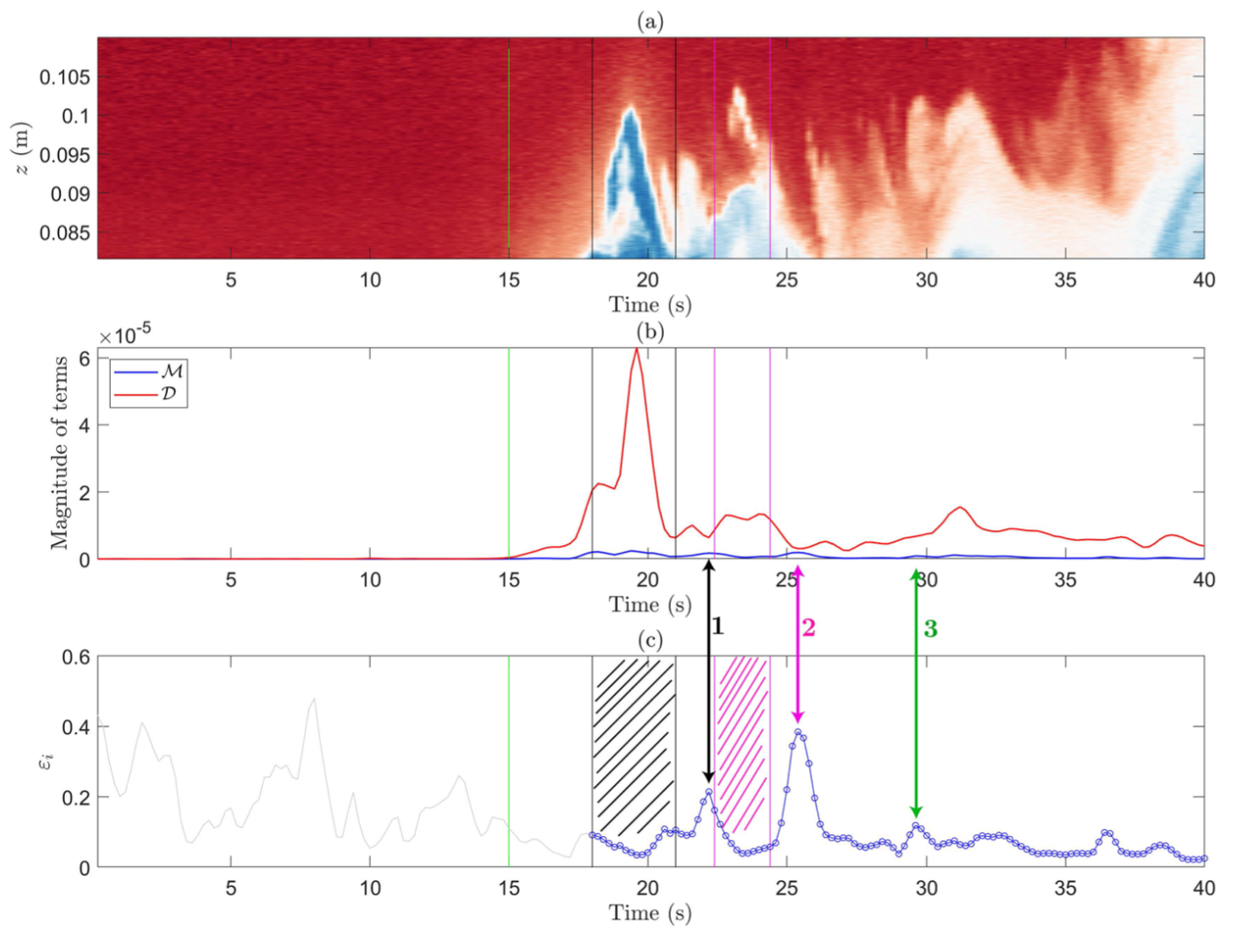
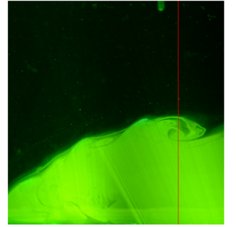
Gravity currents produced by a lock-exchange flow are studied using high-resolution molecular tagging techniques. Instead of employing salt to produce density stratification, an initial temperature difference is introduced in the system to generate the ensuing gravity currents. The experiments focus on the interface between the hot and cold fluids to characterize the resultant mixing across the interface. The present measurements spatially resolve the flow to smaller than the Kolmogorov scale and close to the Batchelor scale. This enables reasonably accurate estimates of velocity and density gradients. The measured density (temperature) distribution allowed estimation of the background potential energy of the flow that is used to quantify mixing. These measurements yield a mixing efficiency of about 0.13 with a standard deviation of 0.05 for the present Reynolds number range. An analysis combining flow visualization and quantitative measurements reveals that spatially local values of high mixing efficiency occur after the occurrence of certain dissipative stirring events. These events, largely associated with vortical overturns, are commonly observed near the interface between the two fluids and are a precursor to locally efficient mixing.
@article{agrawal2021probing,
  title = {Probing the high mixing efficiency events in a lock-exchange flow through simultaneous velocity and temperature measurements},
  author = {Agrawal, Tanmay and Ramesh, Bhaarath and Zimmerman, Spencer J and Philip, Jimmy and Klewicki, Joseph C},
  journal = {Physics of Fluids},
  volume = {33},
  number = {1},
  year = {2021},
  publisher = {AIP Publishing},
  doi = {10.1063/5.0033463},
}
2020
- A parallel nonlinear multigrid solver for unsteady incompressible flow simulation on multi-GPU clusterXiaolei Shi, Tanmay Agrawal, Chao-An Lin, and 2 more authorsJournal of Computational Physics, Dec 2020
A nonlinear multigrid solver for solutions of unsteady three-dimensional incompressible viscous flow working on multi-GPU cluster is developed. The solver consists of a full approximation scheme (FAS) V-cycle scheme to accelerate the computation, in which the artificial compressibility method based Navier-Stokes solver is used as a smoother. Multi-stream overlapping strategies are designed to assist multi-GPU computations. The numerical procedure is validated by computing 3D laminar and turbulent flows within a lid-driven cubic cavity. The predicted results compare favorably with previous benchmark solutions and measurements, both in mean and turbulent quantities. For the performance of the FAS V-cycle scheme, up to two orders of magnitude speedups are reported, and the relationship between work unit (WU) and total grid number N under the deepest FAS V-cycle. A detailed evaluation of the GPU implementation is carried out employing the Roofline model and the scalability analysis.
@article{shi2020parallel,
  title = {A parallel nonlinear multigrid solver for unsteady incompressible flow simulation on multi-GPU cluster},
  author = {Shi, Xiaolei and Agrawal, Tanmay and Lin, Chao-An and Hwang, Feng-Nan and Chiu, Tzu-Hsuan},
  journal = {Journal of Computational Physics},
  volume = {414},
  pages = {109447},
  year = {2020},
  publisher = {Elsevier},
  doi = {10.1016/j.jcp.2020.109447},
}

2019
- Estimation of mixing in a lock-exchange flow using molecular tagging velocimetry and thermometryTanmay Agrawal, Jimmy Philip, and Joe KlewickiIn APS Division of Fluid Dynamics Meeting, Nov 2019
@inproceedings{agrawal2019estimation, title = {Estimation of mixing in a lock-exchange flow using molecular tagging velocimetry and thermometry}, author = {Agrawal, Tanmay and Philip, Jimmy and Klewicki, Joe}, booktitle = {APS Division of Fluid Dynamics Meeting}, year = {2019}, month = nov, address = {Seattle, USA}, } - Experimental investigation of lock-exchange flow using MTV/MTTTanmay Agrawal, Spencer Zimmerman, Jimmy Philip, and 1 more authorIn European Turbulence Conference, Sep 2019
@inproceedings{agrawal2019experimental,
  title = {Experimental investigation of lock-exchange flow using MTV/MTT},
  author = {Agrawal, Tanmay and Zimmerman, Spencer and Philip, Jimmy and Klewicki, Joe},
  booktitle = {European Turbulence Conference},
  year = {2019},
  month = sep,
  address = {Torino, Italy},
}
2015
- Solar absorption refrigeration system for air-conditioning of a classroom building in Northern IndiaTanmay Agrawal, Varun, and Anoop KumarJournal of The Institution of Engineers (India): Series C, Sep 2015
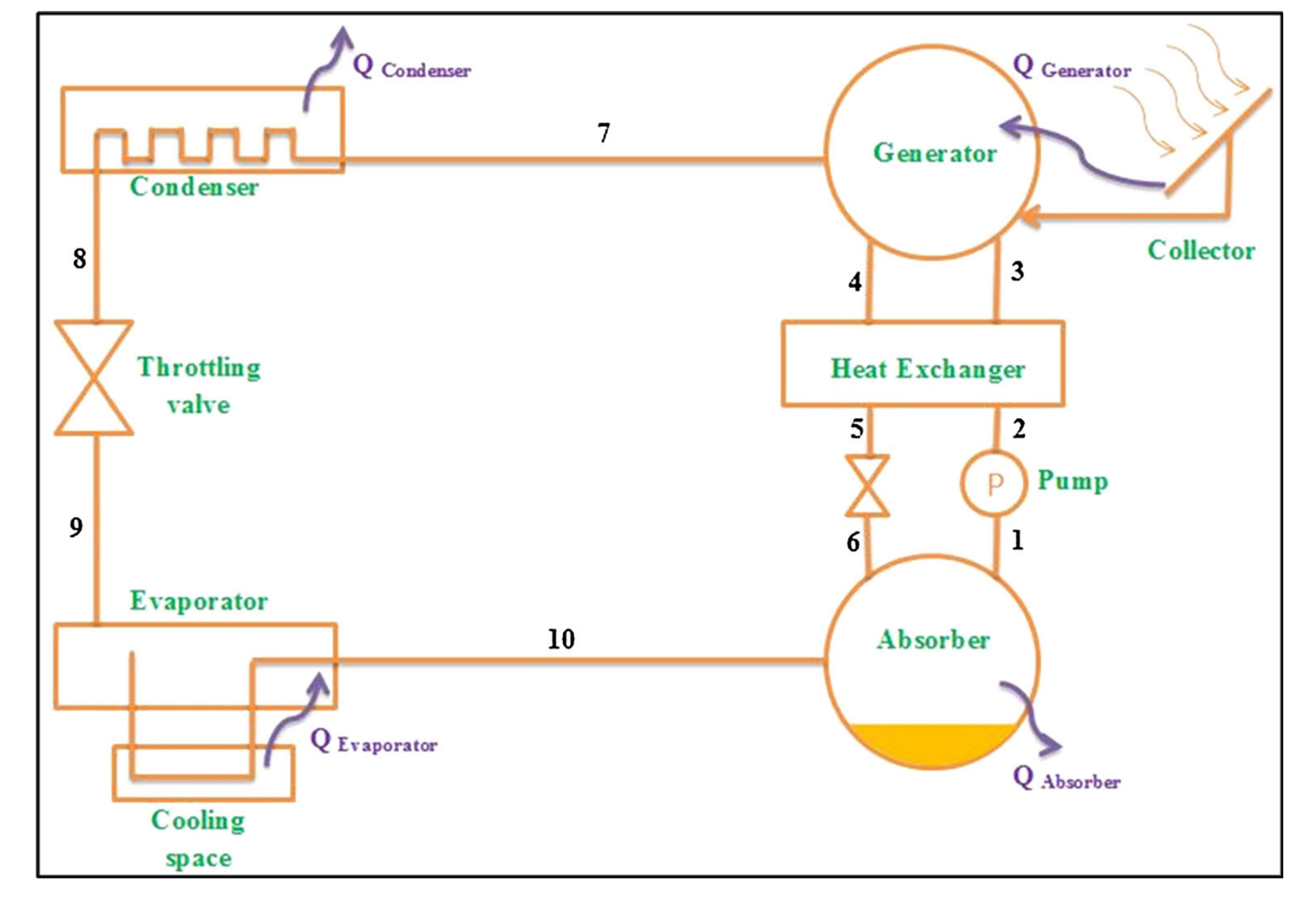
Air-conditioning is a basic tool to provide human thermal comfort in a building space. The primary aim of the present work is to design an air-conditioning system based on vapour absorption cycle that utilizes a renewable energy source for its operation. The building under consideration is a classroom of dimensions 18.5 m × 13 m × 4.5 m located in Hamirpur district of Himachal Pradesh in India. For this purpose, cooling load of the building was calculated first by using cooling load temperature difference method to estimate cooling capacity of the air-conditioning system. Coefficient of performance of the refrigeration system was computed for various values of strong and weak solution concentration. In this work, a solar collector is also designed to provide required amount of heat energy by the absorption system. This heat energy is taken from solar energy which makes this system eco-friendly and sustainable. A computer program was written in MATLAB to calculate the design parameters. Results were obtained for various values of solution concentrations throughout the year. Cost analysis has also been carried out to compare absorption refrigeration system with conventional vapour compression cycle based air-conditioners.
@article{agrawal2015solar,
  title = {Solar absorption refrigeration system for air-conditioning of a classroom building in Northern India},
  author = {Agrawal, Tanmay and Varun and Kumar, Anoop},
  journal = {Journal of The Institution of Engineers (India): Series C},
  volume = {96},
  number = {4},
  pages = {389--396},
  year = {2015},
  publisher = {Springer},
  doi = {10.1007/s40032-015-0180-2},
}